Introduction
Alloy steel plays an important role in industries where standard steel may not provide the required combination of strength, toughness, wear resistance and hardenability. By adding controlled amounts of alloying elements such as chromium, nickel, molybdenum, manganese and other elements, alloy steels can be developed to meet specific engineering and performance requirements.
From automotive components and industrial machinery to gears, shafts and heavy engineering applications, the right alloy steel grade can have a direct impact on component performance and service life.
TSI Metals supplies a range of alloy steel grades for engineering, automotive, manufacturing and industrial requirements, including EN19, EN24, EN36, EN353, 20MnCr5 and SAE8620.
What Makes Alloy Steel Different
Alloy steel is designed around specific material requirements rather than being used as a general-purpose steel solution. Different grades offer different combinations of mechanical properties and performance characteristics.
Depending on the grade and application, alloy steel can provide:
- High strength
- Improved toughness
- Good hardenability
- Wear resistance
- Fatigue resistance
- Reliable machining performance
- Suitable response to heat treatment
The selection of a particular grade should therefore be based on the component design, operating conditions, manufacturing process and required material properties.
Choosing The Right Alloy Grade
There is no single alloy steel grade suitable for every application. Different components require different combinations of strength, toughness, wear resistance and hardenability.
EN19 is commonly considered for engineering components where strength and toughness are important.
EN24 is used for demanding engineering applications where higher strength and toughness are required.
EN36 is associated with applications requiring good hardenability and is commonly considered for engineering components requiring suitable surface and core properties.
EN353 is commonly used for components where wear resistance and suitable case-hardening characteristics are important.
20MnCr5 is a case-hardening steel commonly used for components requiring a hard surface with a tougher core.
SAE8620 is another case-hardening grade used in engineering and automotive-related component applications.
The final grade should always be selected according to the applicable specification and actual application requirements.
Alloy Steel For Automotive Applications
The automotive industry relies heavily on engineered steel components that must perform under repeated loads, friction and operating stresses.
Alloy steel can be used for components such as:
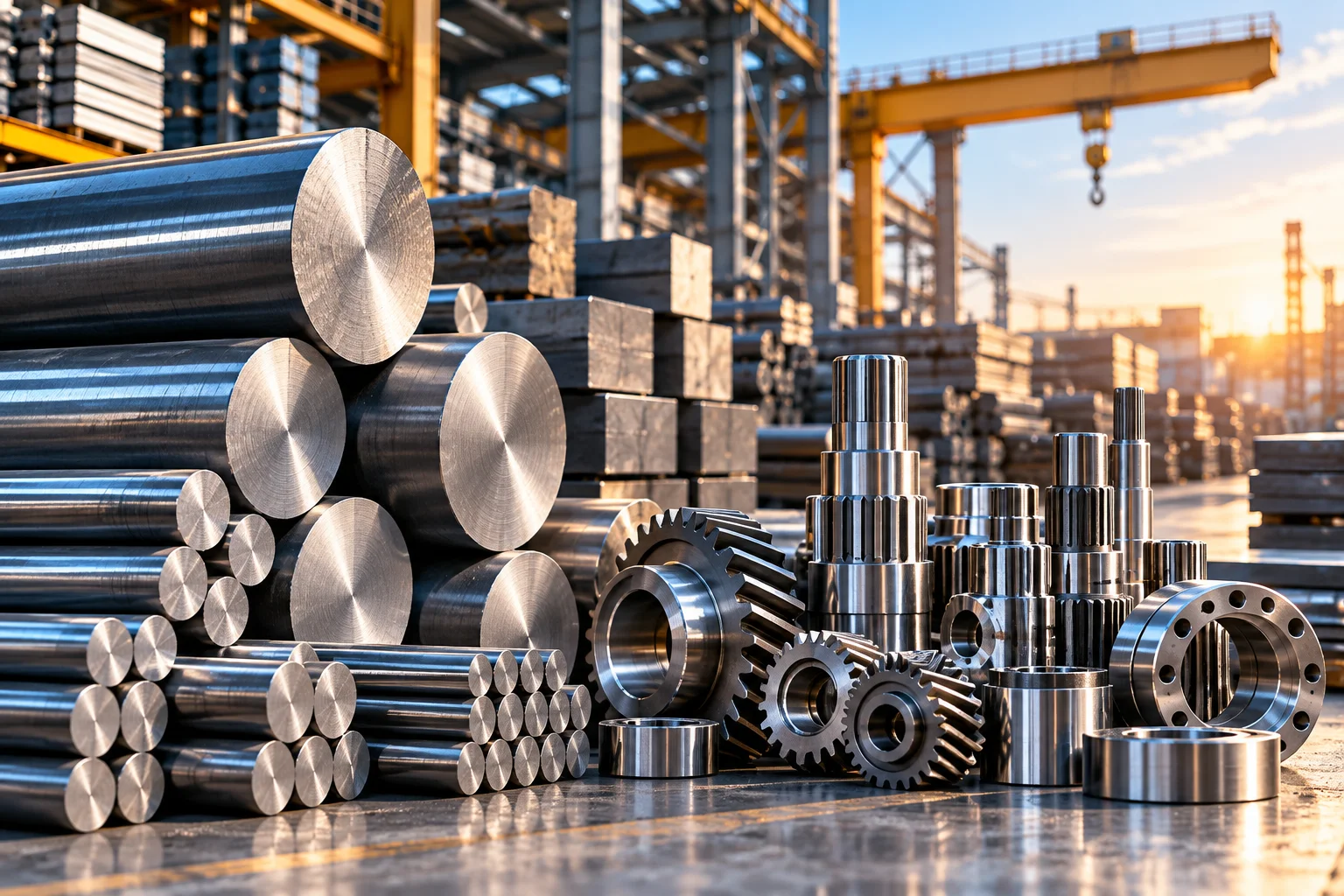
- Gears
- Shafts
- Axles
- Pinions
- Transmission components
- Engine components
- Machine parts
The appropriate grade depends on the component design, manufacturing process and required performance.
Alloy Steel For Engineering
Engineering and manufacturing industries use alloy steel for a wide range of machinery and industrial components.
Typical applications include:
- Heavy machinery components
- Gears and pinions
- Shafts and axles
- Industrial components
- Machine parts
- Power transmission components
- Wear-related components
For these applications, material selection is not simply about choosing the strongest steel. Factors such as machinability, heat treatment, toughness, wear resistance and dimensional requirements also need to be considered.
Stock And Custom Requirements
Industrial buyers often need steel in different dimensions and supply conditions depending on their manufacturing requirements.
TSI Metals supports requirements ranging from standard stock to customised sizes, helping customers source the required material for their applications.
With 3000+ MT stock and 20+ bandsaw machines, TSI Metals is positioned to support industrial requirements involving different grades, dimensions and cutting requirements.
Selecting Steel For Performance
The right alloy steel grade can contribute to dependable component performance, manufacturing efficiency and long-term reliability.
Before selecting a grade, consider:
- Application and operating conditions
- Required strength and toughness
- Wear and fatigue requirements
- Heat-treatment requirements
- Machining requirements
- Required dimensions
- Supply condition
- Applicable material specification
A clear understanding of these requirements helps ensure that the selected material is suitable for the intended application.
Conclusion
Alloy steel provides industries with material options designed around specific engineering and performance requirements. From automotive components and gears to shafts, machinery and heavy engineering applications, different grades can address different combinations of strength, toughness, hardenability and wear resistance.
TSI Metals supplies EN19, EN24, EN36, EN353, 20MnCr5 and SAE8620 to support a range of industrial requirements.
Looking for the right alloy steel grade? Share your requirement with TSI Metals.